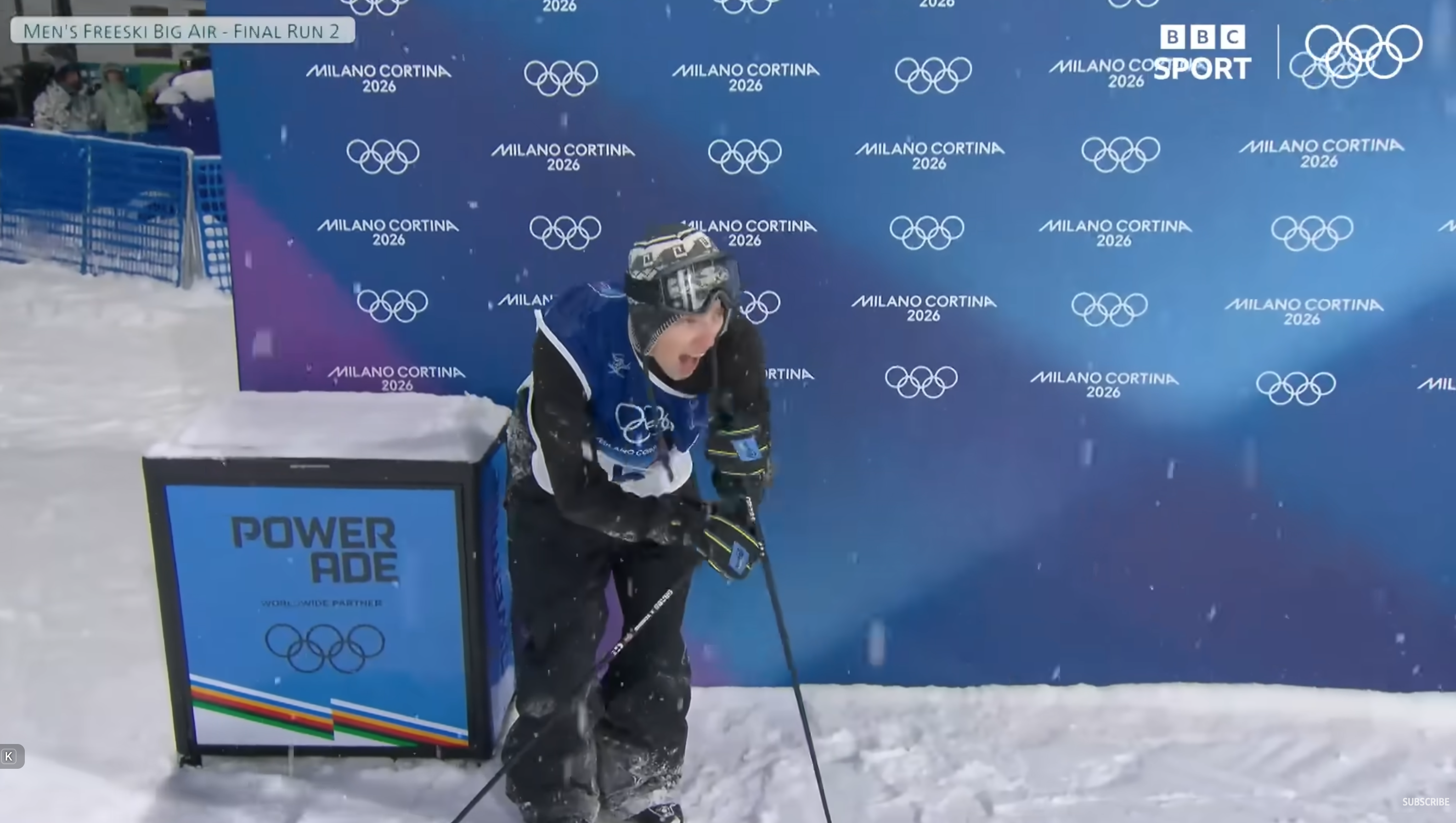
When brands are building a sponsorship strategy and considering which sports properties to partner with, there are many factors in the mix: audience fit, reach, visibility, activation potential, exclusivity, availability, budget. The list is quite long.
I think one of the most under-appreciated factors is brand alignment. And by that I mean, do the core values of this sports team/event/individual line up with those of our brand?
***Caveat time: the importance of this does depend on the core objective of the sponsorship. If it’s simply about exposure and reach, brand alignment doesn’t matter so much, but you still don’t want an obvious mismatch.***
However, if the objective of a sponsorship is to tell a story about your brand – to reinforce, update or shift perception – then it’s important to partner with a property that shares some core values with your own brand. This is especially true when partnering with teams that fans feel passionate about (there is some academic research to support this):
Research by Brochado, Dionísio, and Leal (2018) emphasizes the importance of alignment between brands and national football teams in enhancing brand image. They find that when brands align closely with the values and images of national teams, consumers are more likely to support and endorse the brand. This consistency in values and image increases brand affinity and credibility.
How Sports Involvement and Brand Fit Influence the Effectiveness of Sports Sponsorship
It’s never going to be a perfect alignment, but going a bit deeper and looking at the core values of brand and sports property can often reveal some useful synergies. At a basic level, if you want people to think of your brand as being bold, disruptive and dynamic, you probably don’t want to partner with a sports property that is all about tradition, heritage and elegance. Sounds obvious, but this can get easily overlooked.
Alongside considering the values of the property itself, it can also be instructive to look at the data to understand how fans of that team or sport view themselves, and what they look for in brands. Even within the same category, e.g. fans of leading European football teams, there can be some significant variance.
The chart below shows the qualities that global fans of different teams look for in brands. Some are very similar but there are a few interesting differences, for example:
- 50% of Real Madrid and Manchester United fans like brands to be authentic vs. 31% for Everton fans
- 55% of Real Madrid fans look for innovative brands vs. 33% of Everton and 36% of Celtic fans
- Reliability matters for 60% of Bayern Munich fans vs. 38% of Aston Villa fans
- 36% of Man City fans want brands to be ‘cool’ compared with 28% of Spurs fans

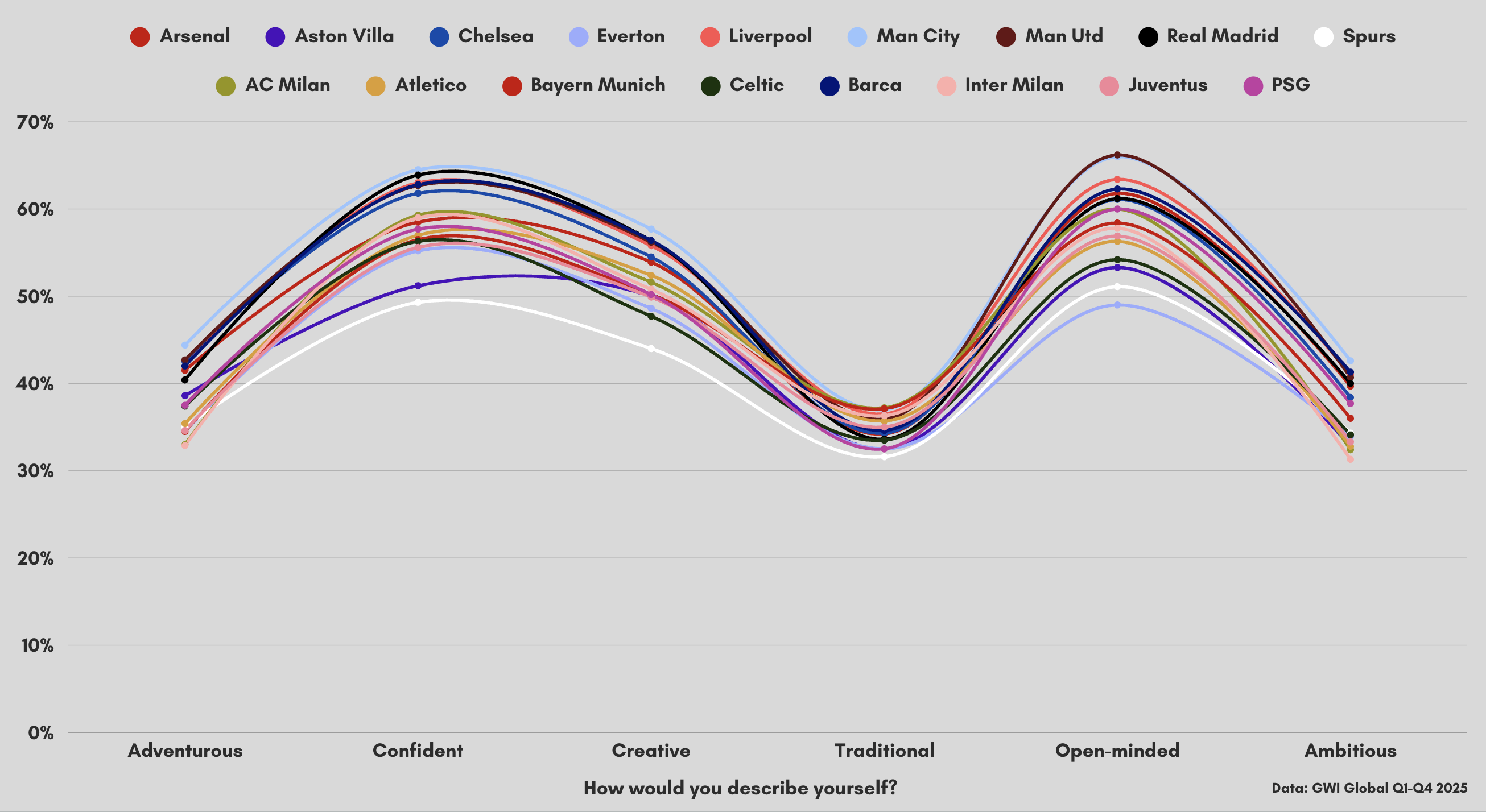
We can also use GWI data to get a sense of how fans of different teams view themselves. Here we can again see some interesting points of difference:
- 66% of Man Utd fans are ‘open-minded’ vs. 49% of Spurs fans
- 65% of Man City fans are ‘confident’ vs. 49% of Spurs fans (sorry, Spurs fans!)
- 44% of Man City fans are ‘adventurous’ vs 33% of Inter and AC Milan fans

Again, these are just indicators and I would want to dig a lot deeper into a specific brand’s audience and objectives, but we can get a sense of how certain teams might align more naturally with certain brands.
As I said at the top, if your sponsorship objective is purely about awareness or mental availability, all of this matters less and the focus will be on overall audience reach and exposure.
But I’ve been working with several clients recently where the sponsorship objective has been all about shifting brand perception among a specific target audience. We’ve specifically looked for properties that genuinely share some core values with the brand, and have an overall vision that is complementary.
Getting this alignment right not only makes the partnership feel more natural and authentic, it also opens up much richer territory for activation that can resonate with fans and move the needle on those brand perception objectives.